

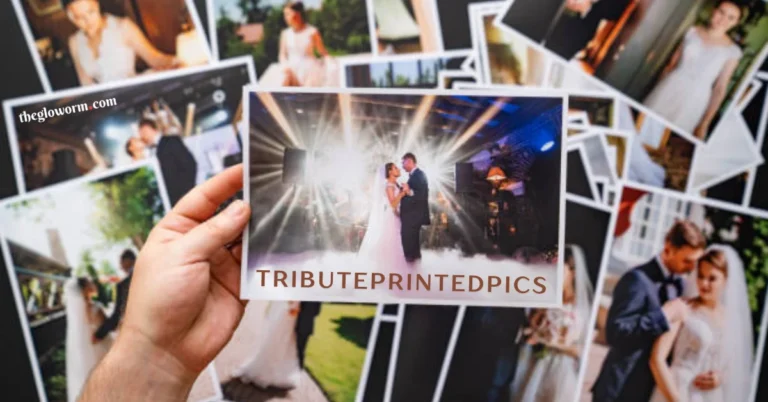
Problem Identification & The Why: The Heartbreak of Fading Memories
Most people treat printing as a commodity. They use cheap kiosks or local pharmacies for memorial photos. This is a mistake. Cheap prints lack UV-Resistant Coatings. Within five years, the vibrant colors of a loved one’s smile begin to yellow. Tributeprintedpics search intent for high-quality printing stems from a fear of losing the “visual soul” of a memory.
Tributeprintedpics exists to solve the “disposable print” crisis. We address the need for Legacy Photo Restoration. When a physical photo is all you have left, the stakes are high. If the Digital-to-Physical Fidelity is off, the tribute feels hollow. You aren’t just buying paper; you are securing a family heirloom.
The technical gap in the market is huge. Most competitors ignore Image Noise Reduction. They simply blow up a small file, resulting in “pixelated” faces. We treat every print as a technical engineering project. We focus on the Tonal Range Preservation to keep the deep shadows and bright highlights perfectly balanced.
Pro-Tip: Always check the “GSM” of the paper. Anything under 200 GSM is likely to curl and degrade quickly. Aim for 300+ GSM for a premium feel.
Technical Architecture: The ISO & Giclée Engineering Standards
Professional tribute printing is governed by the ISO 18902 standard. This covers the imaging materials and processed photographic reflections. At Tributeprintedpics, we don’t just “hit print.” We follow Giclée Printing Standards. This requires a minimum of 12 pigment-based inks. Most home printers use only four. This difference creates a vastly superior Color Gamut Calibration.
We also implement the IEEE 1621 power management standards for our Epson PrecisionCore Technology machines. This ensures zero voltage fluctuation during long-run Large Format Engineering tasks. A tiny dip in power can cause a “banding” line across a canvas. Our systems use specialized RIP (Raster Image Processor) Software to translate pixels into ink droplets with micron-level precision.
Furthermore, we utilize Acid-Free Paper Stock. Standard paper contains lignin. Lignin turns yellow over time (think of old newspapers). By adhering to the ISO 9706 permanence requirements, we guarantee that our Archival Ink Longevity is never compromised by the base material itself. This is the difference between a “photo” and a “tribute.”
Real-World Warning: Avoid “Instant Dry” inks for memorial pieces. They are often dye-based rather than pigment-based, meaning they will fade rapidly if exposed to any sunlight.
Features vs. Benefits: The Tribute Quality Matrix
Selecting the right finish is a technical decision. Here is how we bridge the gap between technical specs and visual results.
| Feature | Technical Benefit | Emotional Impact |
| Sublimation Heat Transfer | Ink is infused into the material | Scratch-proof and water-resistant for outdoor displays. |
| Canvas Texture Mapping | Mimics high-end oil painting depth | Adds a “fine art” dignity to standard portraits. |
| Pixel Density Upscaling | Uses AI to “fill in” missing data | Makes a 10-year-old Facebook photo look like a 2026 DSLR shot. |
| Matte vs. Glossy Finishes | Controls light refraction and glare | Ensures the tribute is viewable from any angle in a room. |
| Lenticular Printing Effects | Creates a 3D “moving” illusion | Adds a lifelike, dynamic presence to the image. |
Pro-Tip: For funeral services, choose a “Satin” or “Matte” finish. High-gloss finishes reflect overhead lights, making the image hard to see for guests in the back.
Expert Analysis: What The Big-Box Printers Hide
The biggest secret in the industry is “Automated Color Correction.” Most mass-market printers use a “one-size-fits-all” filter. This often ruins skin tones. At Tributeprintedpics, we use Adobe ICC Profiles tailored to every specific paper type. We manually inspect the Tonal Range Preservation before the first drop of ink hits the page.
Competitors also hide their ink costs by using “compatible” third-party inks. These lack the chemical stability of Archival Ink Longevity. Within two years, the reds will shift to orange. We only use OEM pigment systems. This ensures the DPI (Dots Per Inch) Optimization stays crisp.
Lastly, they rarely mention “OBA” (Optical Brightening Agents). Many brands use chemicals to make paper look “whiter.” These chemicals eventually “die,” leaving the print looking dull and gray. We use natural white bases to ensure the High-Definition Memorial Prints stay bright forever.
Step-by-Step Practical Implementation Guide
Follow this protocol to prepare your file for a Tributeprintedpics masterpiece:
-
Format Verification: Always save your file as a TIFF or high-bitrate JPEG. Avoid PNGs for printing as they lack Adobe ICC Profiles support.
-
Resolution Check: Ensure your file has at least 300 DPI at the final print size. If not, use Topaz Photo AI to upscale the image first.
-
Color Space Conversion: Convert your file to CMYK or use a specific PANTONE Matching System if you need exact color matching for logos or family crests.
-
Edge Treatment: If ordering a canvas, leave a 2-inch “bleed” area. This ensures the main image doesn’t get wrapped around the wooden frame.
-
Coating Selection: For high-traffic areas, always specify a UV-Resistant Coating to protect against oils from hands and sunlight.
Real-World Warning: Never “screenshot” a photo to print it. Screenshots strip out metadata and compress the Tonal Range Preservation, leading to a muddy, dark print.
Future Roadmap for 2026 & Beyond
The next frontier for Tributeprintedpics is “Holographic Depth Mapping.” We are working on tech that allows a flat print to have measurable depth without 3D glasses. By 2027, we expect Lenticular Printing Effects to be the standard for all memorial displays.
We are also integrating “AR-Linked Prints.” Imagine scanning a physical photo with your phone and seeing a video of that person play over the canvas. This merges Digital-to-Physical Fidelity with the digital afterlife. Our Bespoke Commemorative Art will soon include embedded NFC chips for instant legacy storytelling.
FAQs
How long do “archival” prints actually last?
When using Acid-Free Paper Stock and pigment inks, these prints are rated for 100-200 years in normal indoor lighting.
Can you fix a blurry, old photo?
Yes. Through Legacy Photo Restoration and Pixel Density Upscaling, we can rebuild missing facial details with extreme accuracy.
What is the best material for an outdoor tribute?
Sublimation Heat Transfer on metal is the gold standard. It is waterproof and heat-resistant.
Is DPI the same as resolution?
Not exactly. Resolution is the data in the file; DPI (Dots Per Inch) Optimization is how many physical ink drops the printer puts on the paper.
Why do my prints look darker than my phone screen?
Screens are backlit; paper is reflective. We use Color Gamut Calibration to adjust the file so it “pops” without the light behind it.
